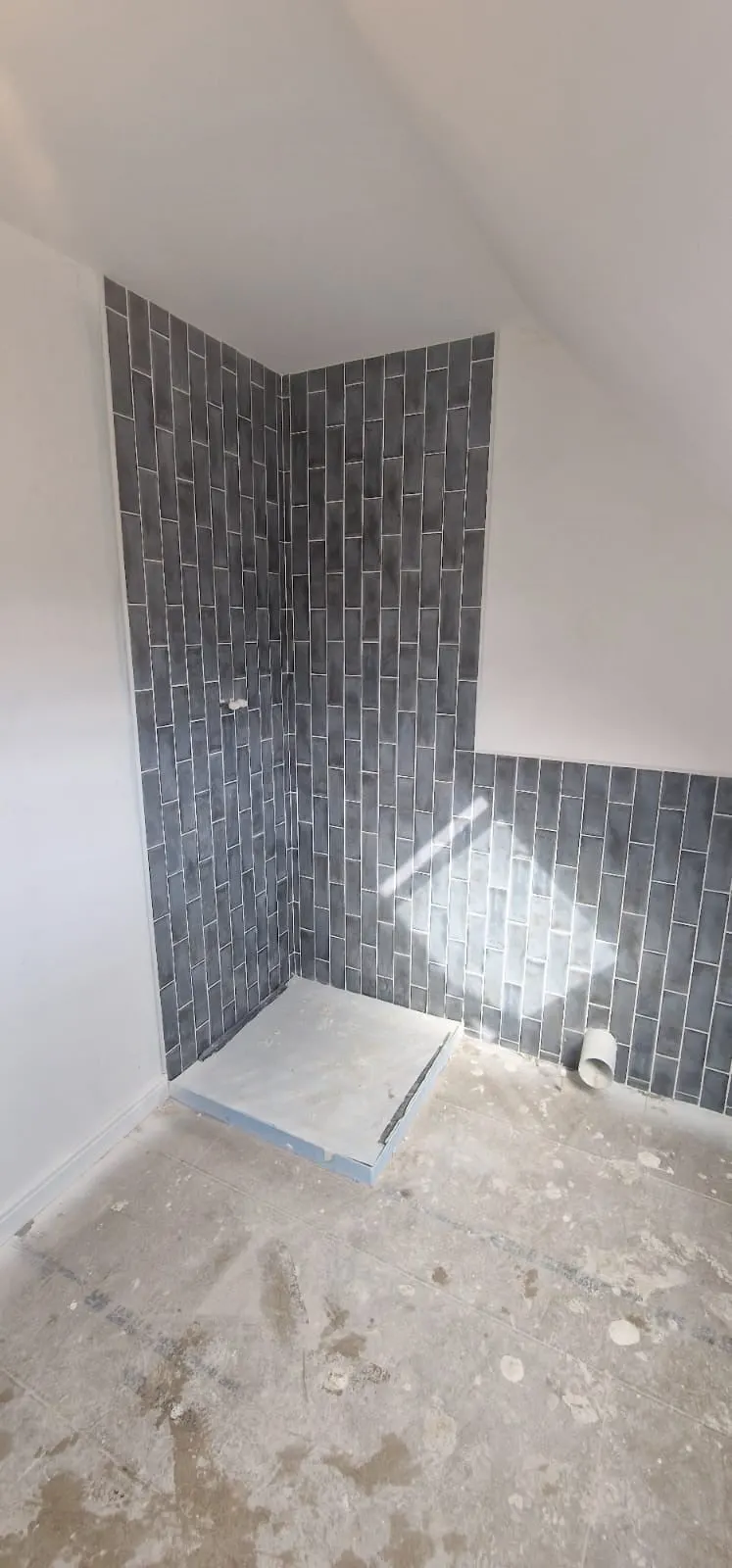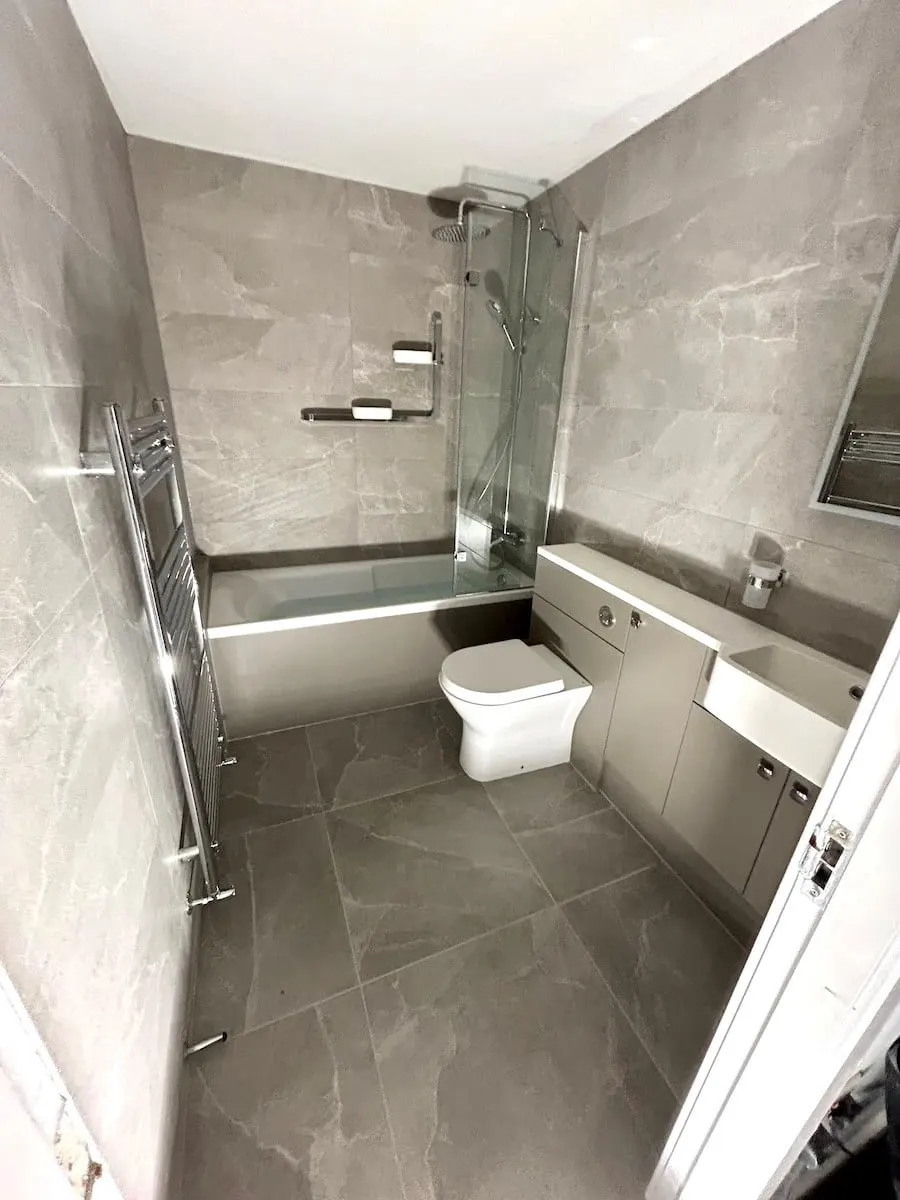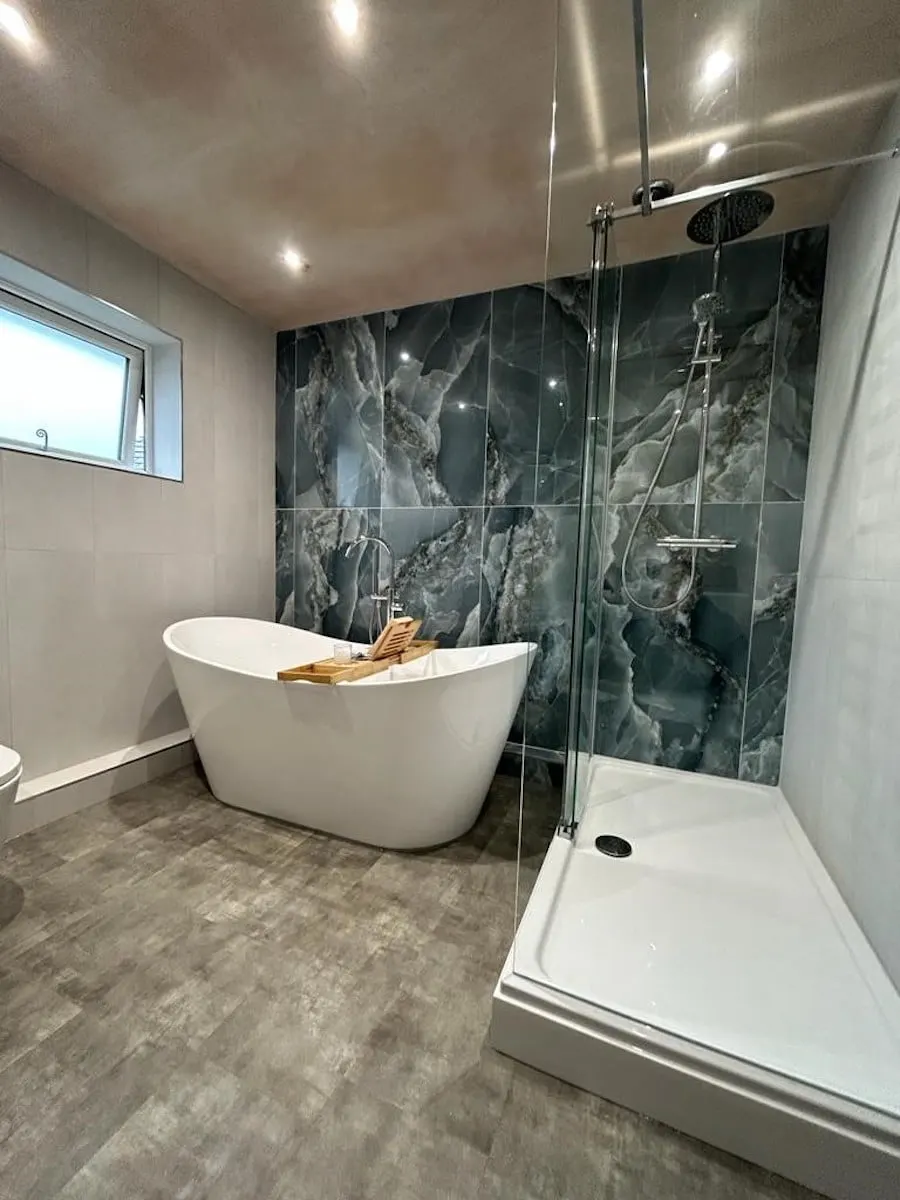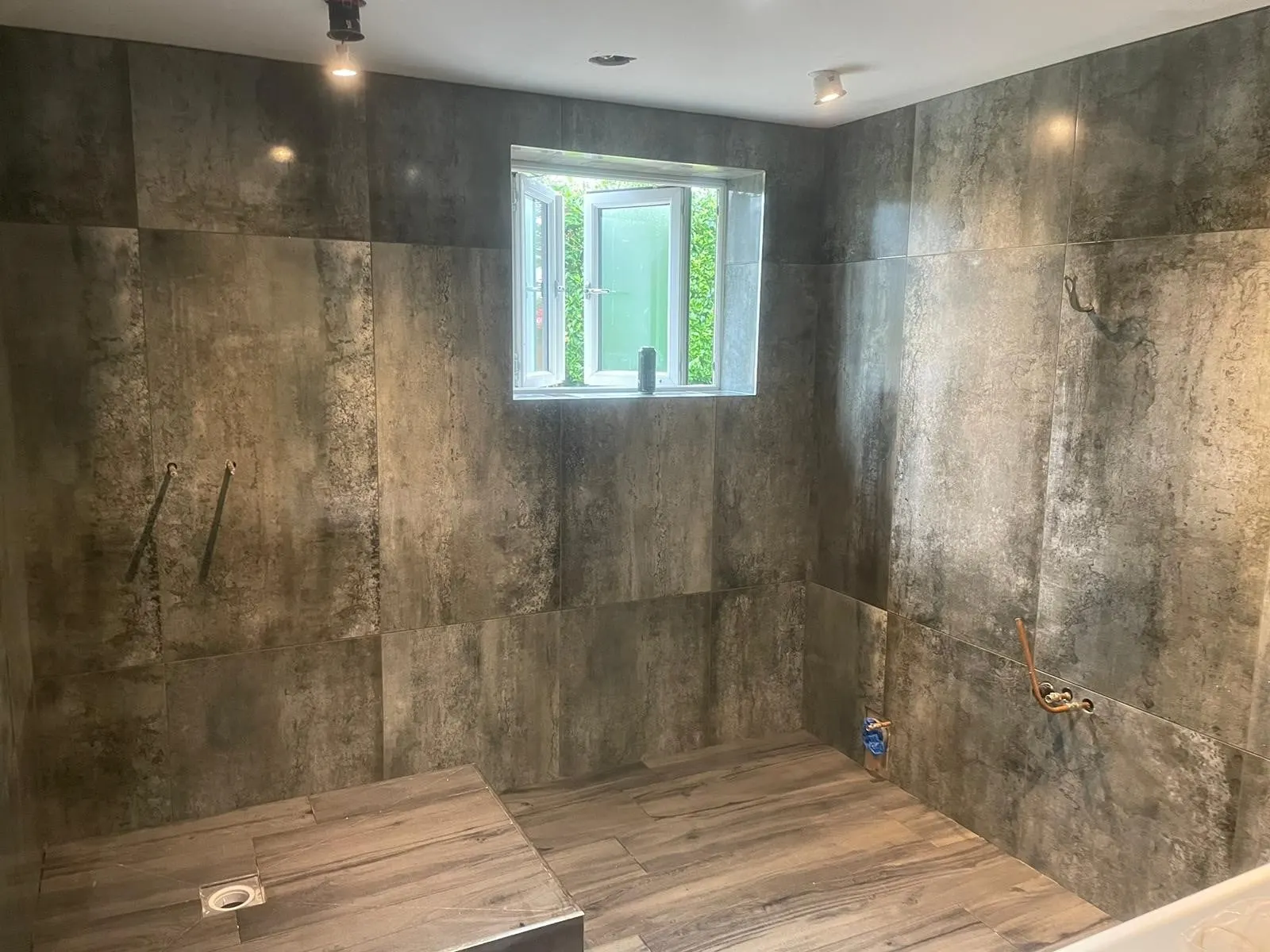
A wet room is a bathroom where the shower area is open and level with the rest of the floor. For it to work, the whole floor is waterproofed (tanked), laid to a gentle fall towards a drain, and finished in tiles that grip when wet. Get those three right and the design is up to you.
What changes the job
Every wet room follows the same principle, but three things decide how we build yours.
- The floor. Concrete floors can be screeded to a fall. Timber floors usually need a pre-formed shower tray former set between the joists.
- The drain. A round centre drain needs the floor to fall from four sides. A linear drain along one wall only needs a single fall, which suits large format tiles.
- The tile. Smaller tiles follow the fall easily. Bigger tiles look cleaner but need a flatter, single-direction fall to sit properly.
Waterproofing comes first
Tiles and grout are not waterproof on their own. Underneath them, we tank the full floor and the walls around the shower with a liquid membrane or sheet system, with reinforcing tape at every corner, joint and pipe. It is the part of the job you never see, and the part that matters most.
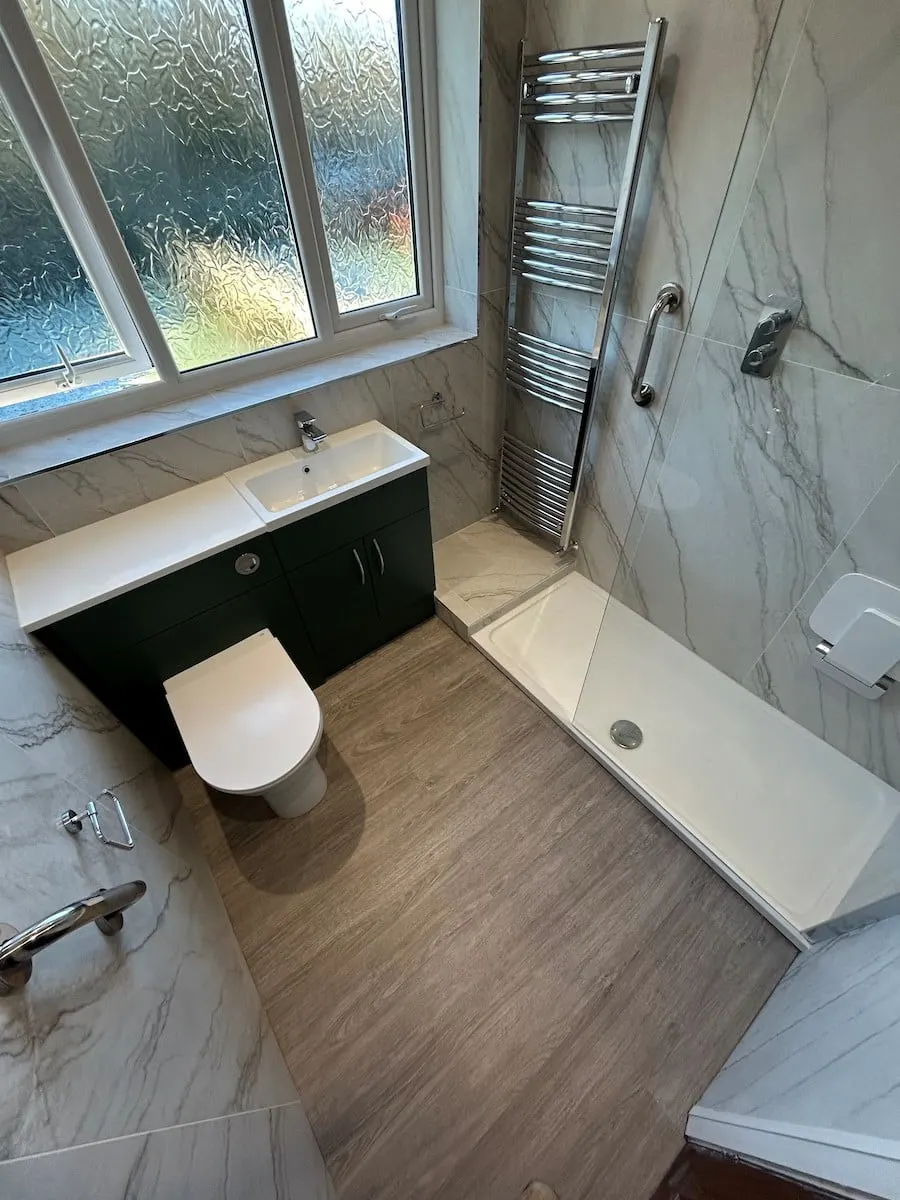
Choosing the tile
Anything on the floor needs to be slip resistant when wet. Look for a rating of R10 or above, or ask the supplier for the wet pendulum value.
| Tile | Works well for | Watch out for |
|---|---|---|
| Mosaic | Following falls in every direction. The extra grout lines add grip. | More grout to keep clean. |
| 300 × 300 mm porcelain | Most wet rooms, with a centre or linear drain. | Choose a textured or matt finish. |
| Large format, 600 mm and up | A clean, continuous look with a linear drain. | Needs a single-direction fall and a very flat base. |
Design ideas that work
- Run the same floor tile through the whole room, so the shower area disappears into it.
- Use a glass screen rather than leaving the shower fully open, to keep the rest of the room dry.
- Put a feature tile on the back wall of the shower only, and keep the rest calm.
- Choose a grout colour close to the tile, so the floor reads as one surface.
How long it takes
Most domestic wet rooms take us between one and two weeks on site, depending on the floor and how much preparation it needs. Tanking needs drying time before we can tile, so it is not a job to rush.